Charlie Munger kept a short list of how smart people come undone. As Warren Buffett usually tells it:
“There are only three ways a smart person can go broke: liquor, ladies and leverage.”
The wording shifts a little with each telling. The list doesn’t.
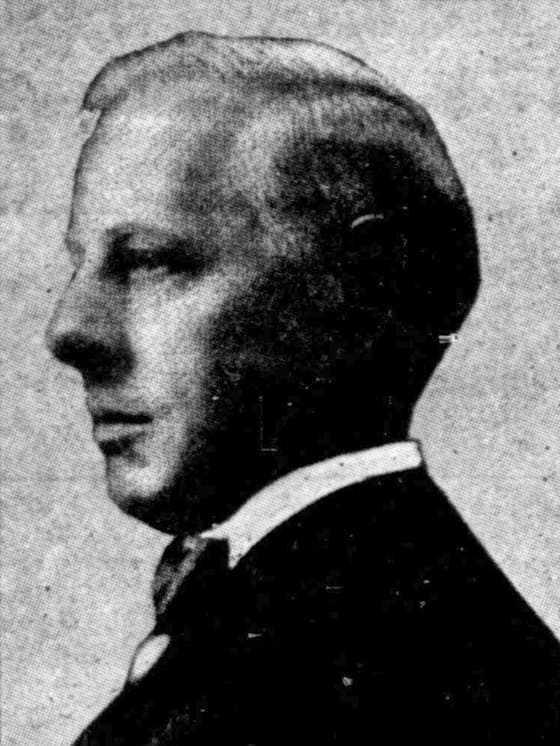
1. Liquor: Jesse Livermore
- 14
- Age he started, chalking up stock prices
- $1M
- Made in a single day in the 1907 panic
- ~$100M
- Made shorting the 1929 crash
- 3×
- Filed for bankruptcy
Wall Street called him the Boy Plunger. He read the market better than almost anyone alive, and he knew the rules: cut losses, don’t overtrade, never bet everything. He broke them anyway.
Reported peaks and bankruptcies, log scale. A sketch of the swings, not a full record.
The record doesn’t show that the bottle ruined him. His liquor was the trade itself: the rush of the big bet, often made bigger with borrowed money. Depression followed the busts and stayed with him in later years.
In November 1940, he took his own life in a Manhattan hotel. He was 63.
Genius made the fortunes. Temperament lost them.
2. Ladies: Jensen Huang
Huang co-founded Nvidia in 1993 over a meal at Denny’s and ran it for 33 years, turning a graphics-chip startup into the engine of the AI boom.
On November 8, he wrote to staff: “I was unfaithful to my wife.” News reports said US officials suspected the woman involved of working for Chinese intelligence. The Justice Department says it has reached no conclusion, and Nvidia’s board says it has no reason to believe secrets were compromised.
Four days later, Nvidia announced he had resigned as CEO and director, effective immediately. It gave no reason.
Building Nvidia, 1993–2026
Letter to resignation, Nov 8–12, 2026
Four days is about 0.03% of 33 years.
The chips didn’t fail, and no rival beat him. A reputation built over three decades came apart in a week.
Reputation compounds slowly and breaks fast.
3. Leverage: Leopold Aschenbrenner
Buffett added his own footnote to Munger’s line: “The first two he just added because they started with L. It’s leverage.”
Aschenbrenner was Columbia’s valedictorian at 19 and later an OpenAI researcher. In June 2024 he published Situational Awareness, an essay arguing that AI would advance far faster than most expected. Then he launched a hedge fund of the same name to bet on it, with about $225 million of seed money.
The bet worked, spectacularly. By early July 2026 the fund managed about $45 billion, after reported gains of more than 1,000%. Its leverage was reportedly up to 400%.
Two years to build. A few weeks to lose most of it.
Then, in July, the AI-infrastructure stocks it owned fell 50–78% from their peaks, while the software stocks it had bet against rose. Both sides lost at once. Margin calls followed, and Citadel bought the fund’s public stock positions at a discount. About $10 billion remained.
- No borrowing
- 2× exposure
- 4× exposure
Your money left
Fall in what you own
At 4× exposure, a 25% fall erases all of your own money. Simplified: ignores shorts, fees and margin rules, which usually force a sale sooner.
He may still be right about AI. Leverage doesn’t let you wait to find out.
Being right later doesn’t help if you’re wiped out first.
The Kuber view
None of these men lacked IQ. A teenager who beat Wall Street at its own game. An engineer who built one of the world’s most valuable companies. A valedictorian at 19.
IQ wasn’t the problem, and it isn’t the edge. As Buffett is usually quoted: “Once you have ordinary intelligence, what you need is the temperament to control the urges that get other people into trouble in investing.”
Munger’s answer was a latticework of mental models: a few big ideas, used as checks. His favourite was inversion. Like the rustic in his story, he only wanted to know where he would die, so he would never go there.
Turn the three sins into three checks:
- Liquor: am I deciding on a high? A hot streak, a rush, a drink?
- Ladies: would I be comfortable seeing this on the front page tomorrow?
- Leverage: if I am wrong, or just early, do I survive?
IQ gets you into the game. Wisdom keeps you in it.
Notes. The Munger line is second-hand: Buffett has repeated it many times, and its exact wording varies. The Livermore chart joins reported figures (his 1907 net worth, his 1924–25 and 1929 trading gains, and his bankruptcies) and is illustrative. Reports that the woman involved with Huang was a foreign agent are allegations; the Justice Department says it has reached no conclusion, and Nvidia’s board investigation is ongoing. Situational Awareness figures are as reported by the press, not from the fund’s own statements.
Disclaimer. Educational content only. Not investment, legal, tax, or financial advice, and not a recommendation to buy or sell any security. References to specific people are illustrative and drawn from public reporting. All investments involve risk, including possible loss of principal.
Sources. Buffett quoting Munger (Yahoo Finance) · Munger Archive · Jesse Livermore (Wikipedia) · Huang’s letter to staff (Nvidia) · CEO transition (Nvidia) · Timeline of the Huang scandal (Wikipedia) · Leopold Aschenbrenner (Wikipedia) · The fund’s losses (CNBC) · $45B to fire sale (CNBC) · Why the fund imploded (CNBC) · Buffett on IQ and temperament (Wikiquote) · Photo: Jesse Livermore, c. 1923 (Wikimedia Commons)
